
Dreams as Warnings and Consolation
The Chemistry of DeathThis thread follows the novel’s ambiguous dreams and forebodings, which move between Linda Yates’s intuition and David Hunter’s grief without becoming a simple supernatural explanation.
increasing Bearing strength in each event
 decreasing
Bearing strength in each eventdecreasingLinda’s Dream of Sally
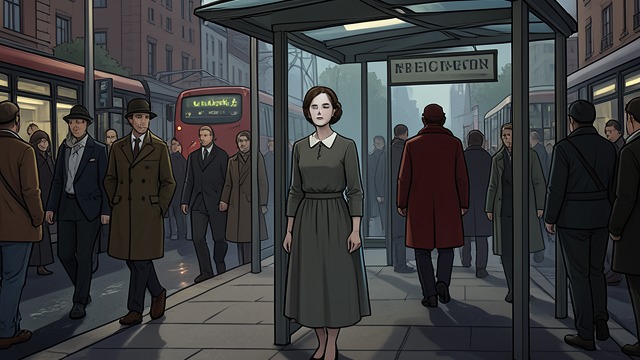
Linda’s Dream of Sally
A name before identification
While waiting for the police, Linda Yates says she believes the body is Sally Palmer because she dreamed of Sally crying at a bus stop and then vanishing. David does not accept the dream as proof, and the identity of the corpse is still unknown.
The episode introduces a tension between rational caution and the human urge to recognize meaning in an event that seems too terrible to be random. Linda’s certainty unsettles David because it arrives before the investigation can supply an answer.
A pattern without proof
The dream later appears to anticipate Sally’s disappearance, but the novel does not provide a mechanism that would establish prophecy. Linda herself retreats from her original claim, calling it coincidence when questioned.
This ambiguity matters: the dream can be emotionally significant without functioning as forensic evidence. It offers a way of registering dread while leaving the reader uncertain about whether anything more than intuition is at work.
David’s Return to His Family
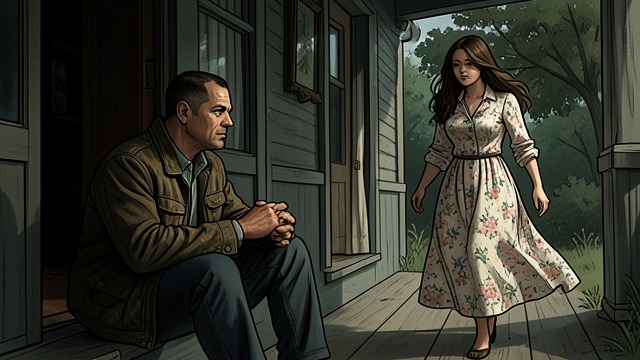
David’s Return to His Family
The dream’s cruel comfort
After seeing photographs of Sally Palmer’s remains, David again dreams of Kara Hunter and Alice Hunter. The dream restores conversation, touch, and the imagined continuity of family life, making sleep more consoling than waking.
That comfort is also dangerous. David knows that his recurring dreams renew the shock of loss when they end, and he has sometimes awakened in places his sleeping body has carried him without his awareness.
The temptation of belief
David resists the idea that the dreams prove he can reunite with his family. Yet he admits that part of him does not want to believe they are only dreams, because accepting that possibility would open a path toward self-destruction.
The sequence presents grief as a contest over interpretation. David’s longing is real, but he understands that turning longing into certainty could make death seem like a destination rather than an irreversible boundary.
Not Yet
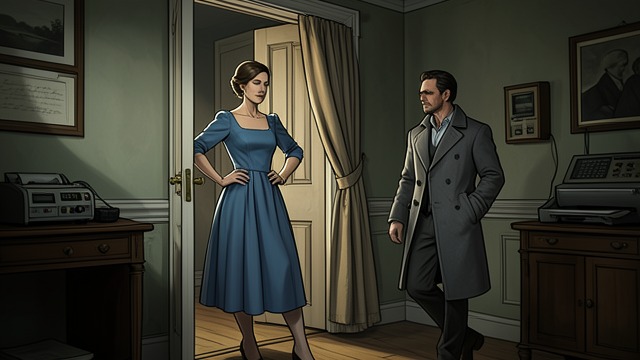
Not Yet
A withheld answer
When David asks Linda Yates whether she has dreamed about Lyn Metcalf, she denies it, then quietly adds two words: “Not yet.” The statement suggests that she is anticipating another dream, but it does not explain how she knows or what the dream might mean.
The words acquire emotional force because Lyn is missing and time matters. They sound less like a prediction of a distant event than a frightened recognition that something may still be unfolding.
Uncertainty as pressure
David initially dismisses the exchange, telling himself that he has lived too long among the village’s fears to start believing in premonitions. But the phrase continues to resonate because it gives language to the possibility that Lyn remains alive.
The novel keeps the supernatural claim unresolved. “Not yet” can be intuition, anxiety, or a meaningful coincidence; its importance lies in the way uncertainty keeps hope and dread open at the same time.
A Warning in the Dream
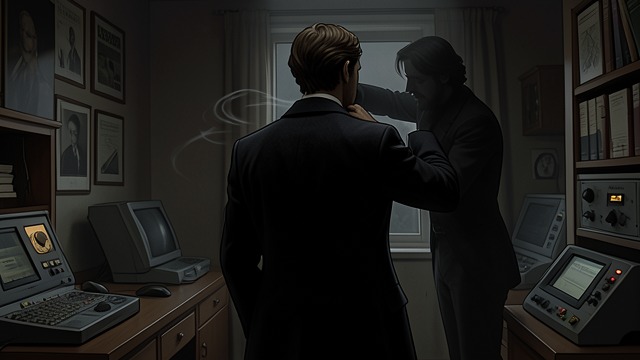
A Warning in the Dream
A message without a source
David wakes after a dream in which Kara Hunter seemed to want to warn him. The dream leaves him with a sense of foreboding, followed by an unexplained touch at the back of his neck and the phrase “Can’t see the wood for the trees” in his mind.
None of these impressions provides actionable information. David recognizes how easily the mind seeks patterns, and he cannot establish whether the phrase points to anything outside his own thoughts.
Meaning after the fact
As the investigation later approaches the truth, the phrase becomes retrospectively suggestive: what is hidden is close at hand, obscured by what appears familiar. But its usefulness as an interpretation does not prove that the dream predicted events.
The scene makes foreboding part of the novel’s atmosphere rather than a dependable investigative tool. David must act on evidence, even while dreams make his emotional world feel as if it carries messages he cannot securely decode.
The Last Familiar House
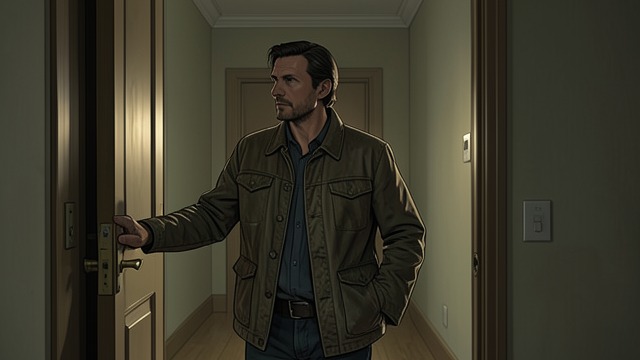
The Last Familiar House
The dream ends differently
On the eve of leaving Manham, David dreams of the house in which Kara Hunter and Alice Hunter have always appeared. This time its rooms are empty, and he understands that he will not return to them in the same way.
He wakes with tears on his cheeks but no sense that anything is wrong. The dream has changed from a reunion that renews loss into a farewell that allows him to acknowledge it.
Letting the image go
The departure does not mean that David has forgotten his family or solved the mystery of what happens after death. It means that the dreams no longer need to keep him suspended between imagined presence and waking absence.
Their ending offers a quiet counterpart to the novel’s physical evidence of decay. Bodies change beyond recovery, but a mourner’s relationship to memory can change without denying love or loss.
The Sunday Neil and Sam report finding a body
The night David first revisits the case in the morgue
After Linda learns that Lyn Metcalf has disappeared
The night before David discovers the grave near the woods
The night before David leaves Manham
